Chemical and Physical Properties
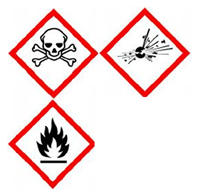
Picric acid is a yellow crystalline solid with a bitter, phenolic odor. When dissolved, picric acid forms a yellow solution, varying from light yellow to very dark yellow-brown depending on the concentration. It is a strong nitrated organic compound and a powerful explosive. Picric acid is highly sensitive to shock, friction, and heat, particularly when dry or when in contact with metals that can form highly unstable picrate salts. Similarly, it reacts with bases and materials like concrete and plaster to form explosive salts. Picric acid is toxic by inhalation, ingestion, and skin contact, and prolonged exposure may cause damage to organs.
Health Hazards
Acute Health Effects: The following acute (short-term) health effects may occur after exposure to picric acid:
- Exposure can result in mild to severe irritation or burns to the skin, nose, throat, and eyes with possible tissue damage.
- Inhalation may cause coughing, sore throat, and shortness of breath. May result in lung damage.
- Ingestion can cause nausea, vomiting, and abdominal pain.
- Exposure to high levels can negatively impact the liver, kidneys, and blood.
Chronic Health Effects: The following chronic (long-term) health effects can occur after repeated exposure to picric acid and may persist for months or years:
- Prolonged skin contact may lead to dermatitis, with symptoms such as dryness, itching, and rash.
- Chronic inhalation exposure may result in respiratory irritation or sensitization with possible lung damage.
- Long-term exposure may damage the liver, kidneys, or blood-forming organs, and may cause anemia.
Accidental Exposure
Any accidental exposure requires immediate medical attention. Call 911 for medical assistance and take the below steps:
- Inhalation: Immediately move to fresh air. If breathing stops, provide artificial respiration to victim.
- Skin Contact: Immediately remove contaminated clothing and rinse affected area profusely with water for at least 15 min. Dispose of contaminated clothing as hazardous waste.
- Eye Contact: Using eyewash, flush eyes with plenty of water for at least 15 min.; ensuring the underside of the eyelids are also flushed. Ensure contact lenses (if worn) have been removed.
- Accidental ingestion: Immediately rinse mouth and drink 8 oz. of water to dilute the acid. Never give anything by mouth to an unconscious person. Do not induce vomiting.
Special Hazards of Picric Acid
- Dry picric acid (containing <30% water) is a powerful explosive that is highly sensitive to heat, shock, and impact.
- Picric acid is highly reactive and forms picrate salts upon contact with heavy metals such as copper, zinc, nickel, and iron; as well as with bases, ammonia, concrete, and plaster. Picric salts are extremely sensitive explosives and present a greater detonation hazard than dry picric acid when exposed to heat, friction, or physical shock.
Safe Work Practices

- Whenever possible, substitute picric acid for a less hazardous alternative.
- Only use picric acid inside of a fume hood. Ensure that an eyewash and safety shower are nearby prior to use.
- Never work alone when using picric acid.
- Do not use metal containers, spatulas, or other tools. Don’t use bottles with ground glass stoppers; use non-sparking tools.
- Containers should always be examined after each use and any residue on the bottle, cap, or threads should be cleaned with a damp cloth to remove any residue. Collect used cleaning cloths as hazardous chemical waste.
- Do not allow picric acid, or picric acid waste materials, to become dry. Wet and seal in plastic if outside of source container.
- Dry picric acid or picrate salts should not be touched or moved under any circumstances. Restrict access to the area and contact HSRM immediately for guidance.
- If old or previously unaccounted for bottles of picric acid are discovered, the following steps should be taken.
- Do not touch the container. Depending on how long the bottle has been left and the state of the chemical inside, even a minor disturbance could be dangerous. If the bottle is older, crystals may have formed between the lid and the container. If this occurs, any attempt to open the container could result in an explosion.
- Visually inspect the container for product identification and for an expiration date. If old or expired, call HSRM.
- Visually inspect the bottle to determine water content and check for signs of crystallization inside of the bottle and around the lid. If there is no evidence of crystal formation and the water content is high (≥30%), the bottle is likely less hazardous. If there is any indication of crystallization or low levels of water in the bottle, the hazard is likely serious. Restrict access to the area and call HSRM immediately for assistance.
Spill Response
If you are not comfortable cleaning up a small picric acid spill for any reason, contact HSRM for assistance: (612) 626-6002 Remove ignition sources. Do not allow spilled material to dry. Dampen spilled material with DI water.
DO NOT dry sweep the material.
- Small spills inside of a fume hood can be cleaned by a laboratory staff who is aware of the hazards of picric acid and is equipped with required spill response material.
- Use a spill response pad/paper towels moistened with DI water to absorb spilled material.
- Place the spill cleanup material into sealable plastic bag, with DI water added.
- Spray DI water onto the spilled area again and thoroughly wash the spill site. Dispose of the used paper towels into a sealable plastic bag as hazardous waste after adding additional DI water.
- Place the sealed plastic bags containing cleanup materials into a solid hazardous waste container.
- Request chemical waste pickup immediately, informing HSRM of the nature of the spill and waste materials.
- Large spills or spills outside of a fume hood should NOT be cleaned by laboratory staff. Evacuate the area, call 911, and call HSRM for emergency assistance.
Waste Disposal
Dispose of picric acid in unused waste containers or containers that have previously held picric acid solution. DO NOT re-use containers that previously contained incompatible materials, including metals and metallic compounds. Always ensure that the waste container is made of a compatible material and that there is secondary containment separating the waste container from non-compatible material like concrete.
Additional Information
For general information regarding the safe use of picric acid, please contact Health, Safety, and Risk Management (HSRM) at [email protected] or (612) 626-6002.