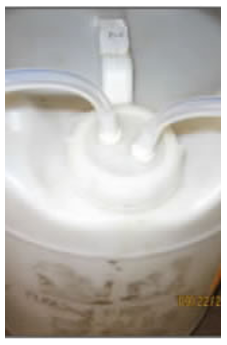
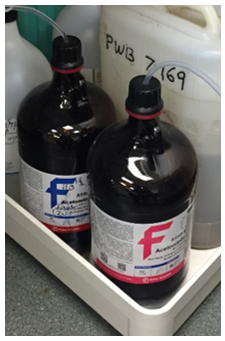
Liquid chromatography (LC) is an analytical technique used to separate, identify, quantify, and purify individual components of a mixture and that commonly used in U of M research laboratories. The most common type of LC at the U of M is High Performance Liquid Chromatography (HPLC). Because organic solvents (e.g., methanol, acetonitrile) are commonly used in the process, most LC waste is regulated by the EPA as hazardous waste. Consequently, all containers collecting LC waste must remain closed while the LC unit is in operation. It is neither acceptable to place a waste line running from the LC unit into an open waste container nor is it acceptable to use foil or Parafilm® as a means of closure. The figures below illustrate these unacceptable LC collection practices. Several universities have received citations in the past from the EPA during hazardous waste inspections, so it is of the utmost importance that LC waste be collected in a compliant manner.
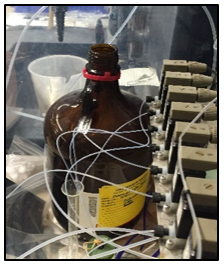
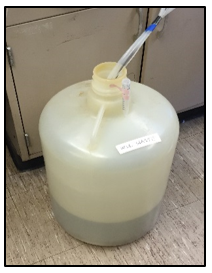
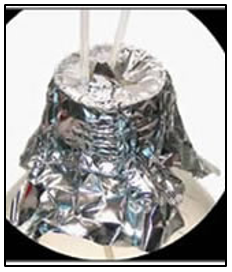
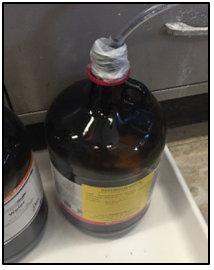
One of the following practices must be employed to comply with hazardous waste regulations for LC waste collection systems:
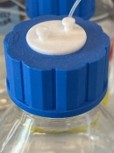
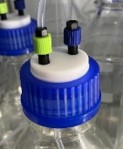
- Purchase an engineered container or cap designed for LC waste collection. The images below show several examples of acceptable solutions for proper LC waste collection that can be purchased.

- An existing cap can be modified by the research lab for LC waste collection. To modify an existing cap, a hole can be drilled into a cap. The diameter of the hole should be similar to the diameter of the waste line; there should be a tight fit between the container opening and waste line. In addition, a hole should be drilled to accommodate any exhaust filter or air valve tube that may be required. It is recommended that either a 4-liter container or 5-gallon carboy be used for waste collection. The modified cap should be replaced with a regular, unmodified cap once the container is full and ready for HSRM pickup.