5. Experiment Planning
Prior to opening a research lab, receiving any hazardous materials, accepting lab workers, or beginning an experiment, pre-planning needs to occur. Prudent planning of experiments is discussed in Chapter 2 of the 1995 version of Prudent Practices in the Lab and in Chapter 6.B Working with Chemicals of the 2011 version. The goals of pre-planning are to identify hidden hazards, minimize all chemical exposures and risks, ensure compliance, and the safety and effectiveness of subsequent work.
Pre-planning involves:
- A review, and identification of potential hazards and regulatory requirements
- An evaluation of the applicable hazards
- Verification that the Hierarchy of Controls has been followed correctly (See section 5.2)
- Documentation of the necessary controls and warning about potential hazards in SOPs
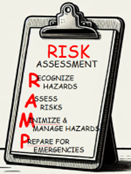
To reduce the risk of harm to yourself and others, and to meet regulatory obligations, it's important to follow a basic 4-step planning process known as R.A.M.P.:
- Recognize hazards
- Assess hazards and risk
- Minimize hazard and risk
- Preparing for emergencies